The Federation of Master Builders puts the average single-storey extension at £1,800 to £3,000 per square metre, and loft conversions run from roughly £27,500 to £75,000 depending on type. Published figures vary widely, so treat any single number as a starting point and get itemised quotes before you commit.
Extension cost per square metre
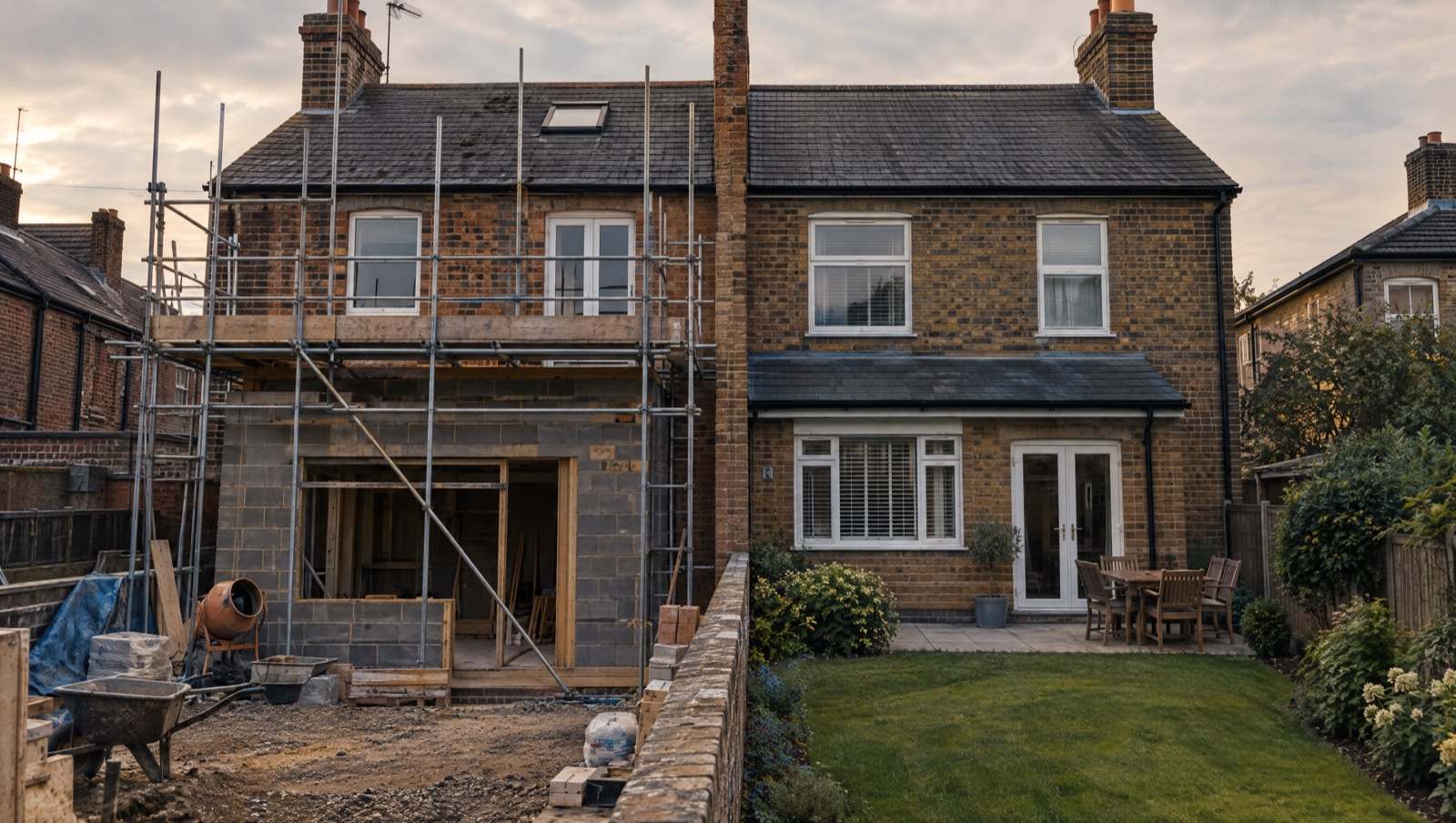
For a single-storey extension, the FMB gives an average of £1,800 to £3,000 per square metre, higher for premium finishes and in London and the South East. As an illustration, a 20 square metre extension at that rate comes to £36,000 to £60,000. Size matters: fixed costs such as scaffolding, foundations and site set-up don't shrink with the footprint, so small extensions cost more per square metre and larger ones are often more efficient. Some websites publish lower or higher ranges, so check what each figure includes — VAT, design fees and fittings are often left out.
Loft conversion costs by type
The HomeOwners Alliance, using Checkatrade's figures, gives average 2026 prices of about £27,500 for a rooflight (Velux) conversion, £50,000 for a dormer, £60,000 for hip-to-gable and £65,000 for a mansard, with bungalows higher at around £75,000. The FMB says a Velux conversion costs from about £30,000. A rooflight conversion involves the least disruption to the existing roof and costs the least, but adds the least space; dormer, hip-to-gable and mansard conversions add more room and need more building work.
Where you live changes the price
The FMB says extensions in London and the South East can cost 30 to 50% more per square metre than the national average, because labour and materials cost more there. Tight urban sites with restricted access or little parking also cost more than suburban plots with easy access.
What pushes the price up
On an extension, the FMB points to removing load-bearing walls, installing steelwork, poor ground conditions and difficult drainage or utility relocations. Specification matters too: structural glazing and feature bi-fold doors need larger steel beams and extra detailing, and high-performance insulation and premium finishes raise the budget. Loft conversions often include roof retiling, new windows, a permanent staircase and an en-suite, and a conversion that creates a new storey needs a protected escape route and interlinked smoke alarms — all of which add materials and labour.
Costs on top of the build
VAT at 20% applies to most building labour and materials, according to the FMB. If you need planning permission, the FMB gives a householder application fee of £528 in England, and around £240 for a permitted development certificate. Councils also charge building control fees that vary by area, and if the work touches a shared wall you may need a party wall surveyor, typically £900 to £2,700 according to the HomeOwners Alliance. Ask every builder whether their quote includes these or leaves them to you.
How to budget realistically
Compare at least three itemised written quotes like for like, as the FMB advises, and be wary of one that's unrealistically cheap: the FMB warns that costs often increase as the job progresses. Keep a contingency fund of around 10% for unexpected costs — that's the FMB's advice for loft conversions, and it's sensible on an extension too.
Frequently Asked Questions
Is a loft conversion or an extension cheaper?
It depends on size and type. A 20 square metre extension at the FMB's range costs £36,000 to £60,000, while loft conversions average roughly £27,500 to £65,000 depending on type, so the ranges overlap. A rooflight loft conversion is usually the cheapest way to add a room. Compare like-for-like quotes for your specific job rather than relying on averages.
Does a bigger extension cost less per square metre?
Often, yes. The FMB explains that fixed costs like scaffolding, foundations and site set-up don't scale with size, so a small extension can feel disproportionately expensive per square metre while a larger footprint spreads those costs further.
Why do quotes for the same job vary so much?
Usually because they don't cover the same things. Specification, ground conditions, whether VAT, fees and fittings are included, and how much the builder has allowed for unknowns all change the total. Ask each builder for an itemised quote covering exactly the same scope.
How much contingency should I keep?
The FMB recommends a contingency fund of around 10% for unexpected costs on a loft conversion. It's a sensible rule for any building project, especially in older properties where hidden problems are more likely.
Where this information comes from
- Federation of Master Builders — Single-storey extension costs
- Federation of Master Builders — Loft conversion cost: a breakdown
- HomeOwners Alliance — Loft conversion costs
- HomeOwners Alliance — Party wall surveyor costs
General information only, not legal or financial advice. Last checked 2026-09-30.