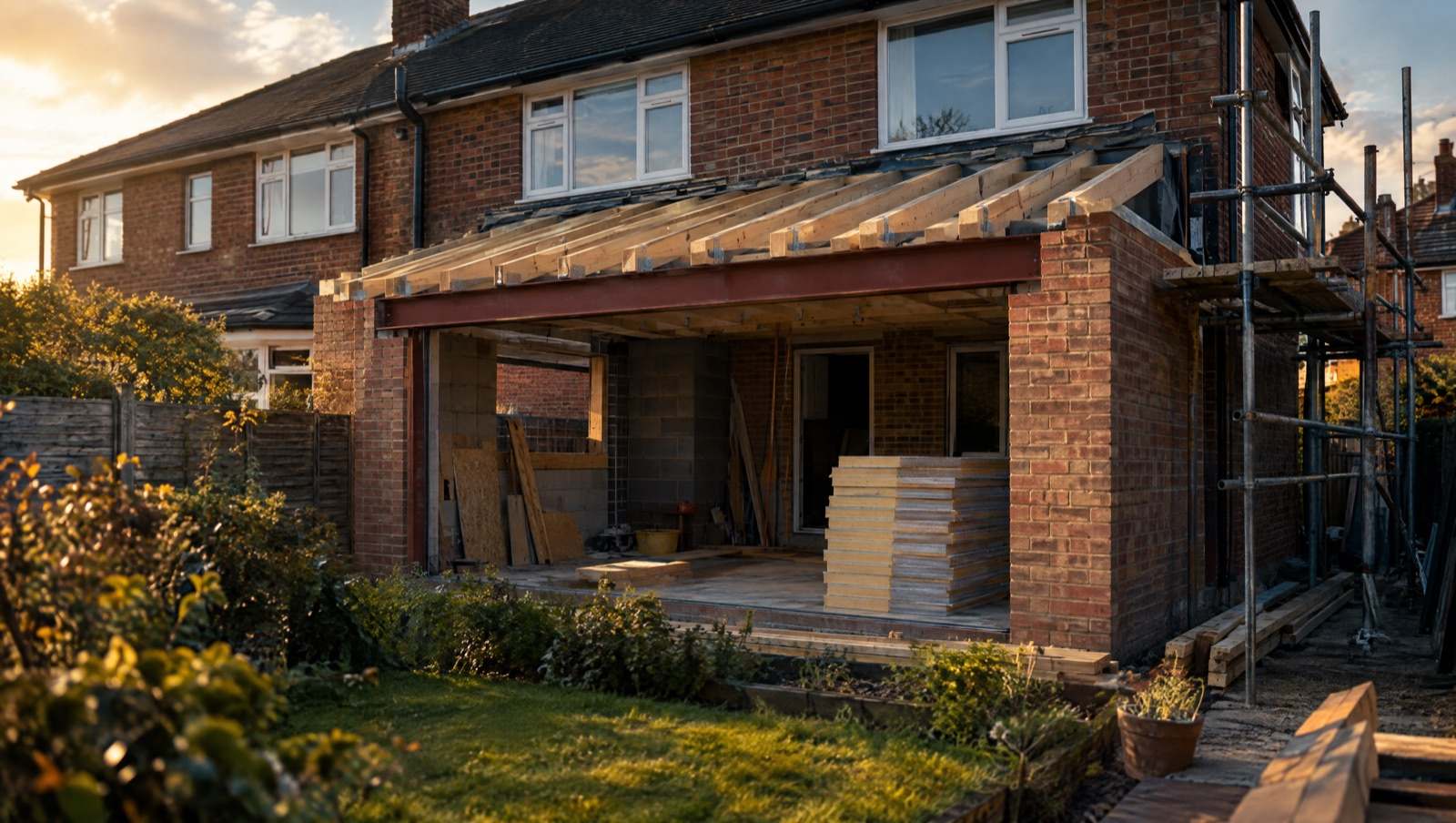
If your extension or loft conversion involves cutting into a shared wall, building on or at the boundary, or digging foundations close to a neighbour's building, you usually have to serve notice under the Party Wall etc. Act 1996 before work starts. The Act applies in England and Wales, and it applies whether or not you need planning permission. This is general guidance, not legal advice — a party wall surveyor can confirm your position.
When the Act applies
The Act covers three broad situations: work to an existing party wall or party structure, new building at or astride the boundary line between properties, and excavation within 3 or 6 metres of a neighbouring building. The government's explanatory booklet lists common examples of work to a party wall, including cutting into it to take the bearing of a beam (for example for a loft conversion), raising its height to add another storey, extending it downwards for a basement, and demolishing and rebuilding it. A detached extension well inside your own plot, away from any shared wall, may not trigger the Act at all.
The 3 metre and 6 metre excavation rules
Section 6 of the Act catches excavation near a neighbour's building. It applies if you excavate within 3 metres of any part of a neighbour's building or structure and the work goes deeper than the bottom of their foundations. It also applies if you excavate within 6 metres and any part of the work will meet a line drawn downwards at 45 degrees from the bottom of their foundations. Both are easy to trigger on a rear extension close to a boundary.
Notice periods
Notice for work to an existing party wall or structure must be served at least two months before the planned start. Notice for a new wall built up to the boundary, or for excavation, must be served at least one month before. A notice is only valid for a year, so don't serve it too far ahead of the work. The notice should describe the work, include plans for any excavation, and say when you plan to start. You can deliver it in person, post it, or send it by email if the neighbour has said they're happy to receive it that way.
If your neighbour consents, objects or doesn't reply
A neighbour can consent in writing, in which case the work can go ahead as agreed. If they refuse, or simply do nothing for 14 days, a dispute is treated as having arisen and surveyors must be appointed — either one agreed surveyor acting for both sides, or one each. If a neighbour refuses or fails to appoint a surveyor, you can appoint one on their behalf so the process can continue. RICS explains that where the neighbour doesn't agree in writing, a surveyor or surveyors determine the time and manner in which the work can be carried out.
Who pays and what it costs
The booklet says the building owner will usually pay all the costs of drawing up the award, including the neighbour's surveyor's fees, if the work is solely for the building owner's benefit. The HomeOwners Alliance puts typical party wall surveyor costs at £900 to £2,700 for most standard projects, and around £1,000 where one surveyor is appointed. By project, figures from Checkatrade are £900 to £1,200 for a loft conversion, £1,200 to £1,500 for an extension and £1,800 to £2,700 for a basement, and costs can double if each neighbour appoints their own surveyor. Hourly rates run from £90 to £450.
What happens if you start without notice
The booklet is clear that if work starts without notice being given, an adjoining owner can seek to stop the work through a court injunction or seek other legal redress. It's far cheaper and quicker to serve notice properly, and to serve it early enough to fit around your design and building control timeline.
Frequently Asked Questions
Do I need a party wall agreement for a loft conversion?
Often, yes. The government booklet gives cutting into a party wall to take the bearing of a beam for a loft conversion as an example of work the Act covers. A conversion that doesn't touch the shared wall may not trigger it, so check before you start.
Can my neighbour stop my extension under the Party Wall Act?
The Act is designed to let owners carry out works while protecting the neighbour's interests. Where the neighbour doesn't agree in writing, surveyors decide the time and manner in which the work is done, rather than the neighbour deciding whether it happens.
What if I start work without serving notice?
Your neighbour can seek a court injunction to stop the work or pursue other legal redress. Serve notice first.
Does the Party Wall Act apply in Scotland or Northern Ireland?
No. It applies throughout England and Wales only. Scotland and Northern Ireland have their own rules.
Where this information comes from
- GOV.UK — The Party Wall etc. Act 1996: explanatory booklet
- RICS — Party walls consumer guide
- HomeOwners Alliance — Party wall surveyor costs
- legislation.gov.uk — Party Wall etc. Act 1996
General information only, not legal or financial advice. Last checked 2026-09-30.